Thursday, September 21, 2006

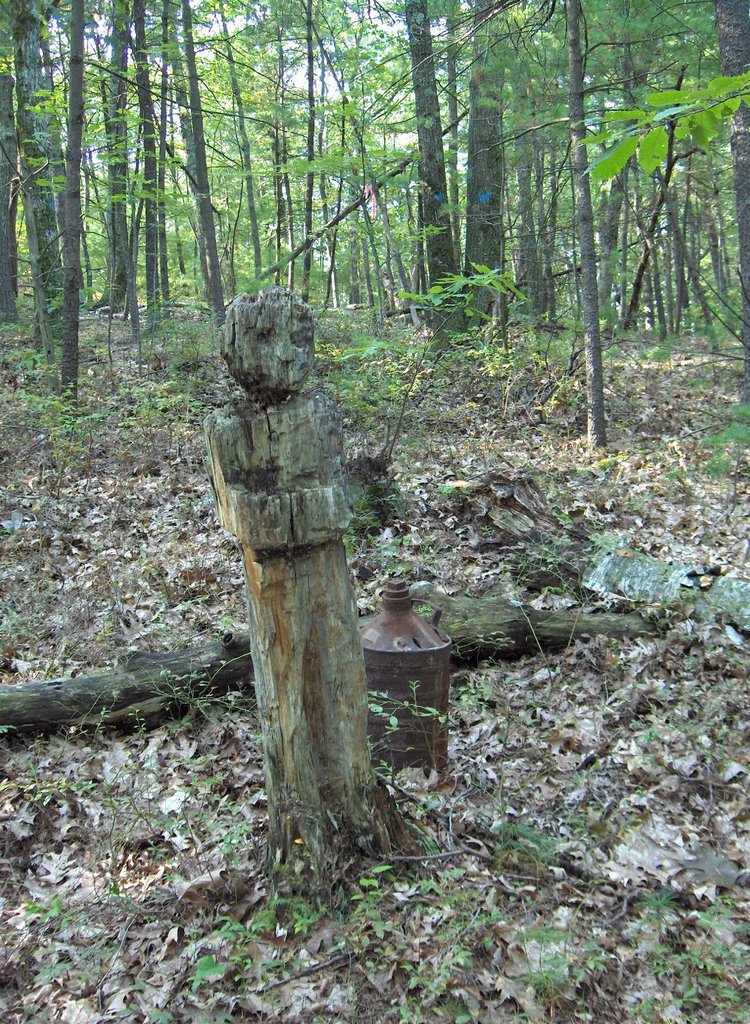
Carved Effigy made from a Tree Stump

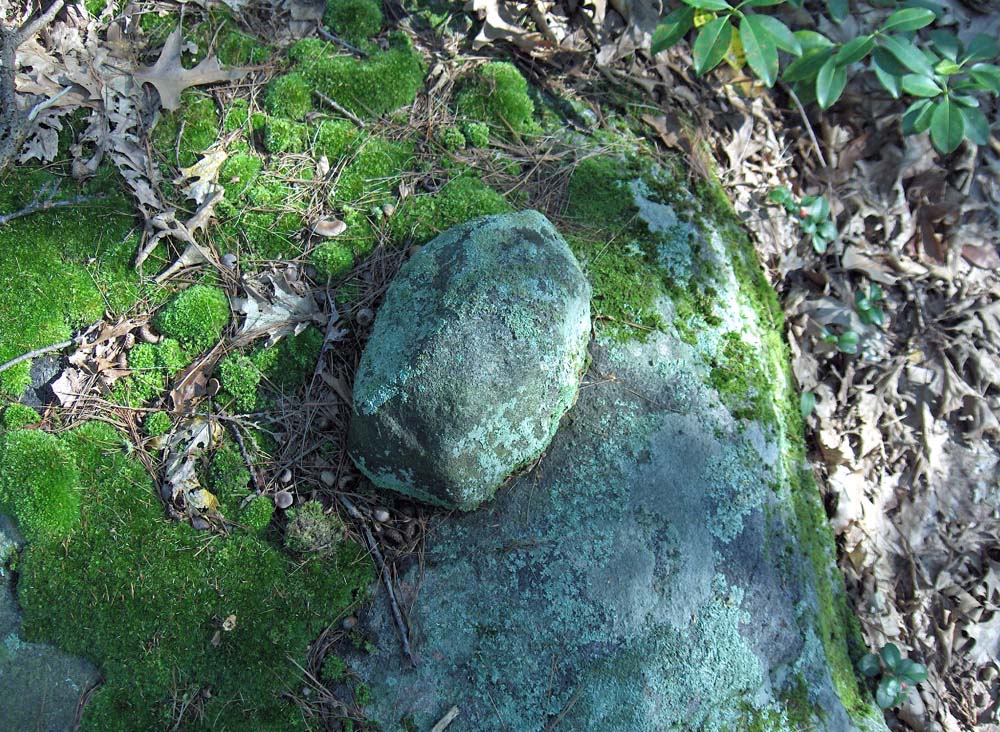
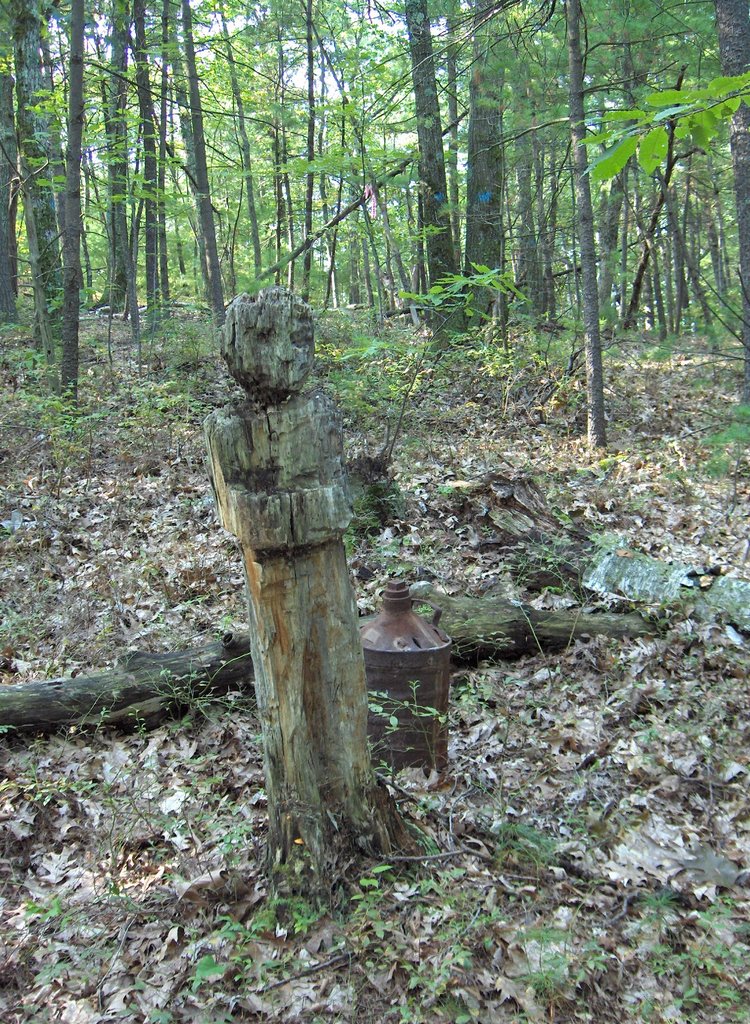
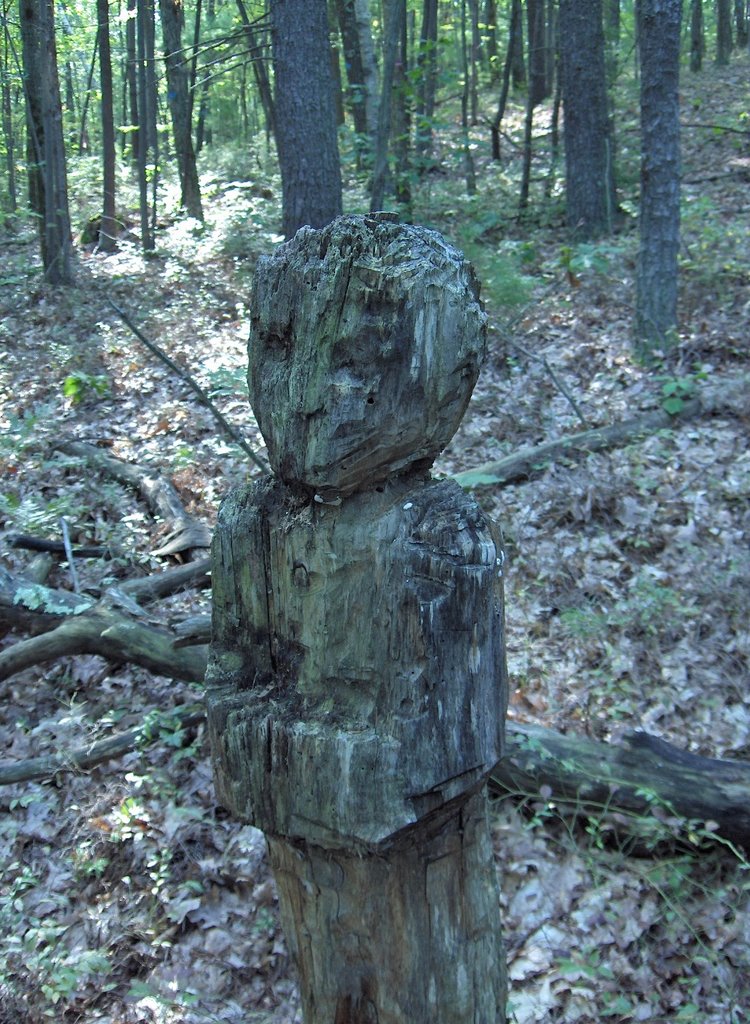
I was walking (tresspassing actually) in the middle of the woods, on the border between Sterling and Leominster, Mass. and had just come from a small ceremonial rock pile site on a slope facing west over a wetland. The slope was along a ridge and as I got to the northern end of the ridge I turned right to climb to the top of the ridge and see what was there. I found something new to me: a human figure carved with an axe from a tree stump and facing northward over a wetland and towards further hills to the north.There was a rusty can next to the figure and it looked to me like an old kerosene can (can anyone identify it?). In the above picture you can get a closer look. Notice the can top has been punctured in two places. I am pretty sure the punctures were made with an axe. If this is indeed a punctured kerosene can, then there must have been some fire making activity at this spot - but I did not see any charcoal. What really struck me was the quality of the work. In this previous picture, from the back, note how the small of the back is hollowed out and the upper part of the buttocks are indicated. This is not the kind of detail a first time wood carver would do. Nor would an in-experienced person be able to carve such a simple but effective face, using an axe.
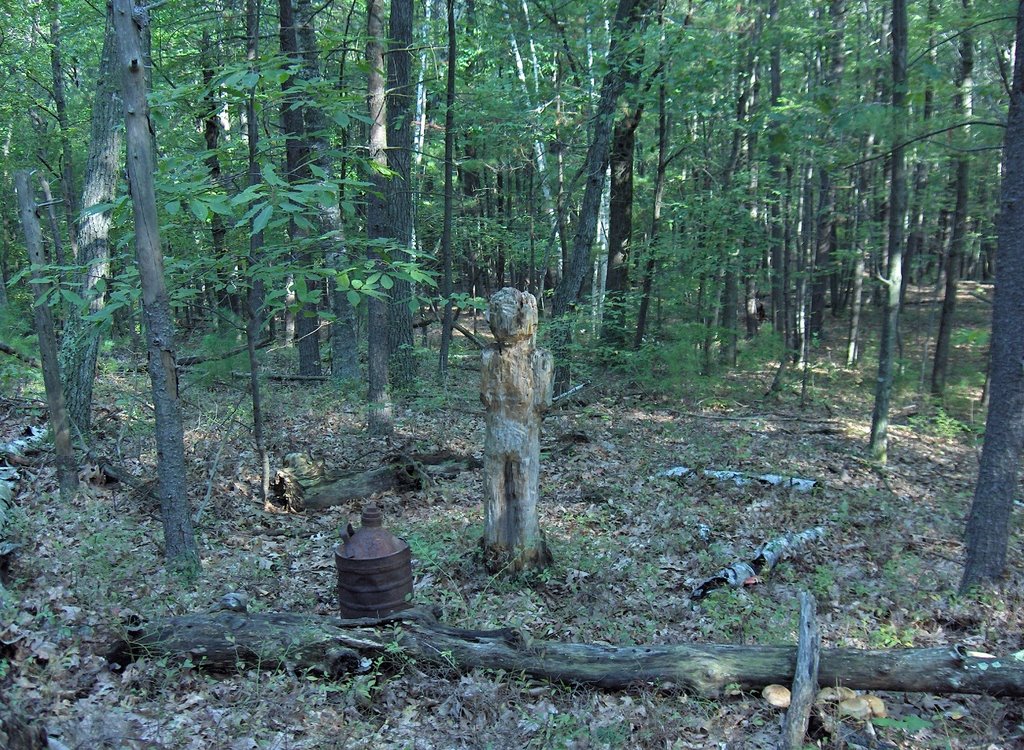
I have done some figure carving and it is not easy to do, especially not with an axe. This figure is the work of someone who knew how to use an axe and someone comfortable out in the woods. I do not think it is "new age" and, since this blog is a story about hidden activities of the Native Americans, I am only too happy to assume the figure is a ceremonial item, like the site nearby. This figure did remind me of the wooden effigies mentiond in Manitou on page 341.

As for the age of this, I should have payed much closer attention to the wood. Is it oak or is it cedar? Oak can rot away in ten to twenty years. Cedar could last more than fifty years. So there is not that good a date estimate for when the figure was carved. But we can agree it is not very old. Glad I got to see it before it is gone. It was tempted to steal it - a Katchina doll from Sterling. But it is fine where it is, doing its job of watching over the valley.

Wednesday, September 20, 2006

The Place on the Wayside - Edgartown, MA

by JimP

Excerpts from MARTHA'S VINEYARD by Henry Franklin Norton. Copyright 1923

- "Hiacoomes came forward and shook the hand of his beloved teacher, and, bursting into tears, placed a white stone at his feet, saying: I put this stone here in your name and whenever I pass, here I shall place a stone in your memory until you return."

- "This monument was a boulder given by the Indians of Gay Head. The Martha's Vineyard Chapter, D. A. R., had a bronze tablet placed on the boulder telling the story of young Mayhew's work and death. Since the dedication in 1901 the greater part of the original pile of stones has been removed by souvenir hunters."

[Click here] to read the entire text. Scroll down about 1/3 for The Place on the Wayside.

Hemlock covered slope below Rocky Hill

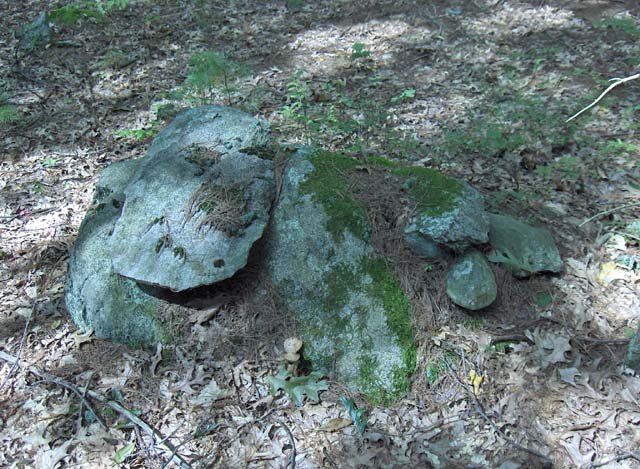
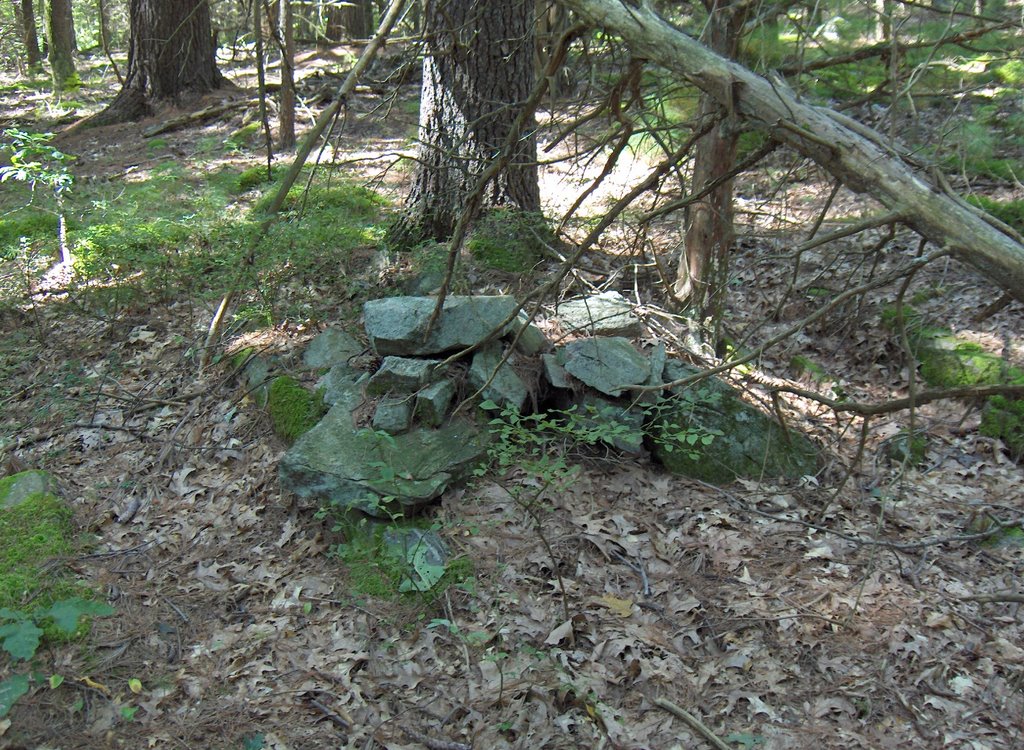
This is a small site with perhaps 8 piles at the end of a ridge, facing north over a lowspot towards Rocky Hill. Just a few rock-on-rocks and a pile that was tipped over. This was suggestive:

A Circular Ditch and Mound - Rocky Hill Sterling

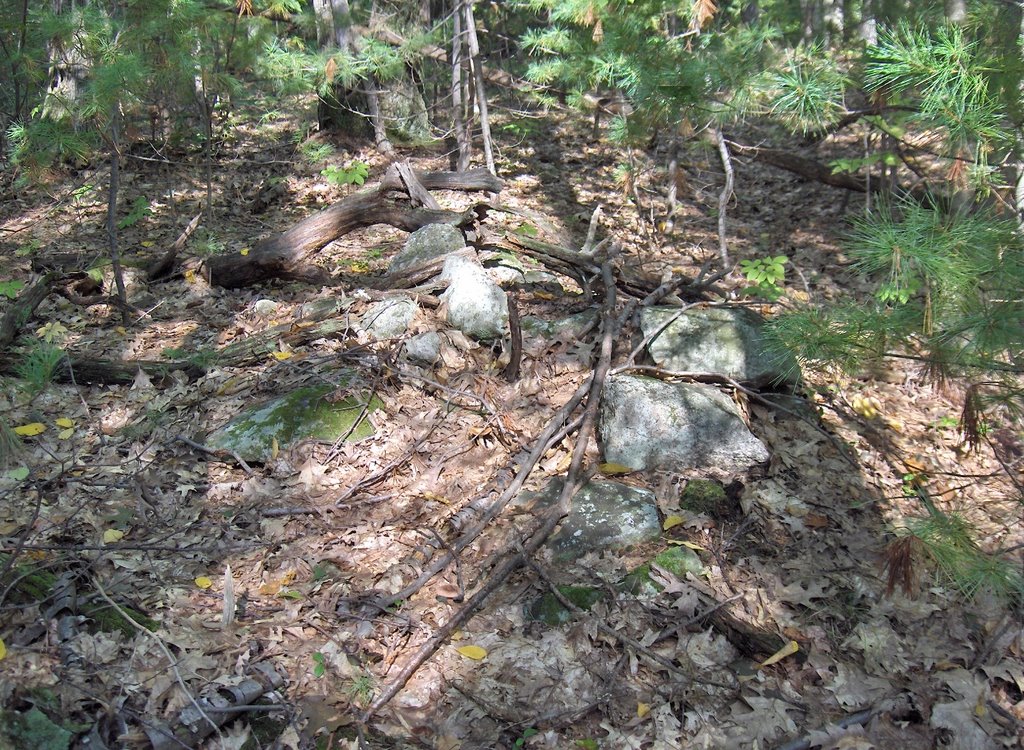
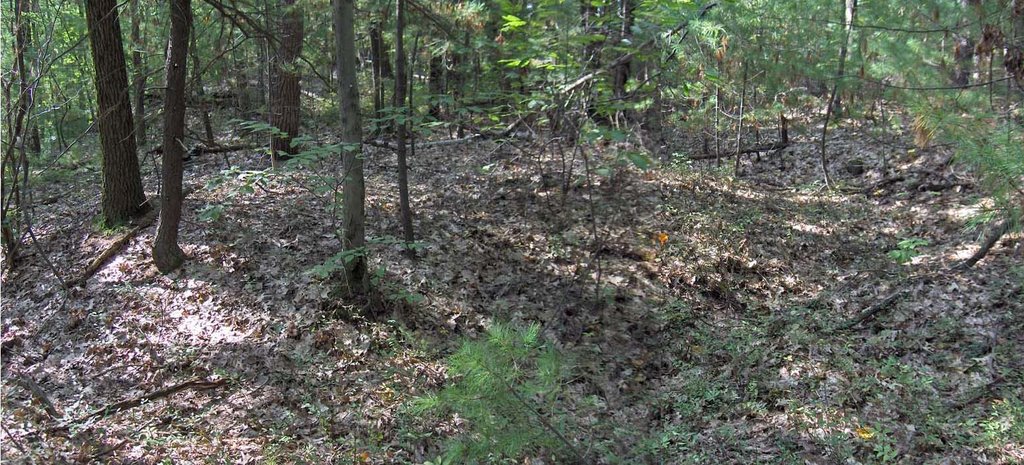
On the southern shoulder of Rocky Hill in Sterling (the hilltop itself is in Leominster) you might notice a rock pile and, nearby, a circular ditch with slight mound in the interior of the circle. Here is the rock pile as I first saw it: And here is the circular ditch. Can you make this out on the forest floor in the dappled light?
The rock pile is just to the right of this.

I should have explored more nearby but was in a hurry to get to the top of the hill which turned out to be a disappointment.

answers.yahoo.com

This is from a site called answers.yahoo.com
Why don't they try Google or Yahoo Search?

"Rock piles tell stories we don't want to hear"

"Hawai`i National Park recognizes that rock-pile building is a serious threat to its preservation mission..." [Click here]

Tuesday, September 19, 2006

A rock-on-rock a day keeps the doctor away

"These Mysterious Hills"

A blog mentioning this one and a nice article about rock piles.
[Click here]
I added a permanent link to the right.

Rock Art Acoustics - Steven J. Waller's Rock Art Acoustics page

Not rock pile related but possibly of interest. We have discussed before that acoustic properties of certain locations may be the reason rock piles are placed there. [Click here]

Washington Georgia - Cairns and Mounds

"Near this highway are three Indian mounds, great cairns of white stone on the east-west ridge of a high hill rising from the headwaters of the Ogeechee River. Presumably burial or ceremonial mounds, they are surrounded by many small rock cairns. The last Indians to occupy this area were an alien tribe, "Yuchis" or "Children of the Sun." Supposedly Iroquois-Mohawk origin, they spoke the language of the Sioux. A warlike race, they constantly fought the Creeks and Cherokees and were driven west of the Chattahoochee River in the Yamassee War of 1715. "
[Click here]

Whidbey Island - Puget Sound

The Indian sites are shell midden sites, lithic sites, and rock cairn sites and may be both prehistoric and historic, probably dating from post-glacial times to the early 20th century...
[Click here]

[(sarcasm) I had no idea colonial field clearing techniques reached that far away from New England]

"Suicide Boys" at Indianz.com Message Board

The fourth member of the group, a teenage warrior called Noisy Walking, was honored with a headstone in 1999. A cairn of piled stones left by his friends and family helped identify the spot where Noisy Walking was mortally wounded. It's not far from where the three new markers were placed. ....

...Cairns, along with Sioux and Cheyenne accounts written down after the battle, help determine where warrior markers should be placed. No cairns have been found yet

[Click here]

Note cairns related to death but not functioning as graves - PWAX

Monday, September 18, 2006

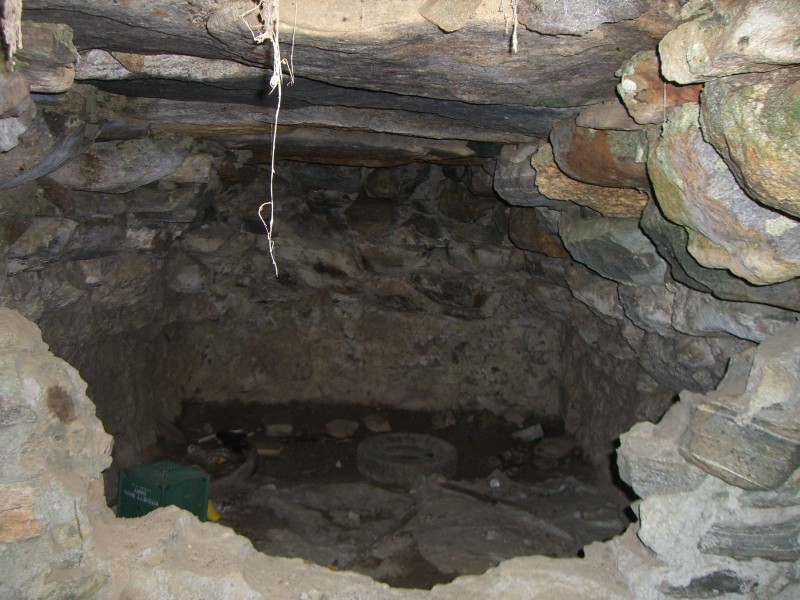
More pics of Chamber from Lake Carmel NY

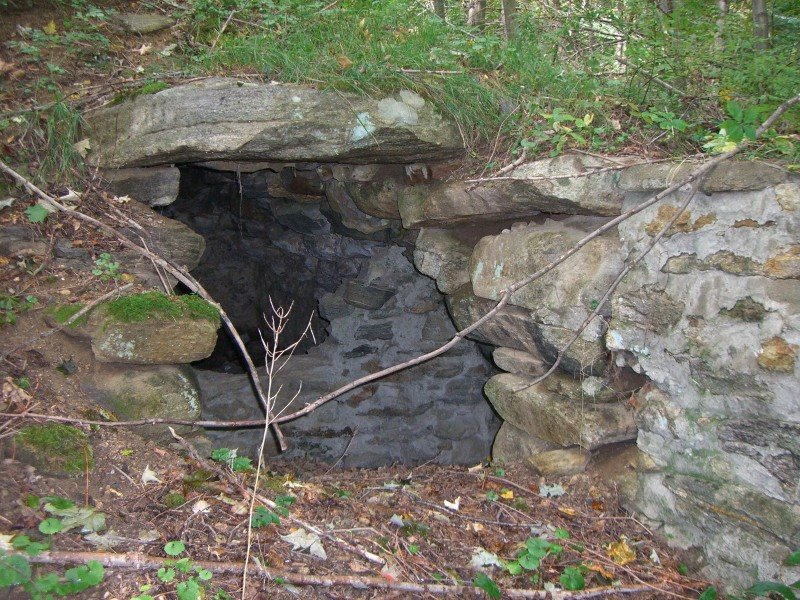
Ryan Sprole send in two more pictures of the chamber discussed here the other day ([Click here]) This chamber is in Lake Carmel, NY.

Rock-on-Rock

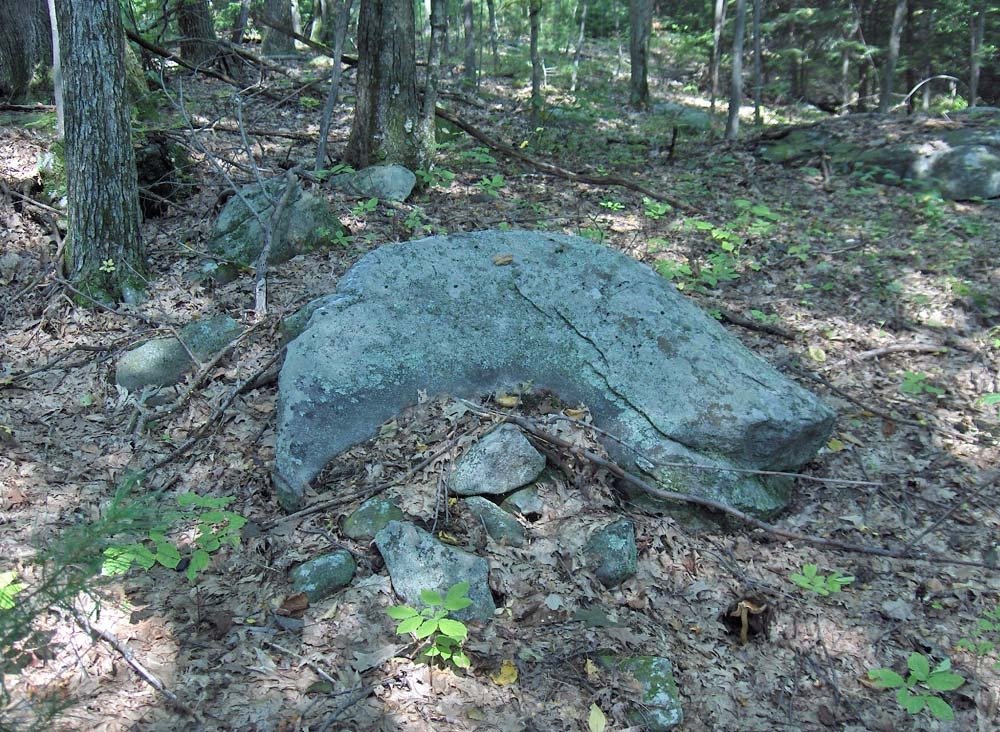
Boulder Seat - Powderhouse Hill Bolton, MA

I wanted to explore Powderhouse Hill again, concentrating on the eastern slope - because it is a continuation of the topography of Oak Hill to the north. However, it seems as though the high density of rock piles on Oak Hill does not continue to this location and this hill is pretty bereft of features to catch the eye. I did see one small site with about 4 piles, and also thought this boulder was worth recording.Note the semicircle of rock on the left.

Sunday, September 17, 2006

Friday, September 15, 2006

What is with all the elongated cross-bar rocks?

In the previous post, the 3rd, 5th, and 6th pictures show piles with an elongated rock across them. In the 3rd picture it is pointing towards the camera and in the others the view is from above. Here is another. Note the larger rock to the left which is what I am calling a "cross-bar". I associate such structures with effigies where, the elongated rock is supposed to be a pedestal for the figure. That may not be valid here but many of the piles on this slope have the feature.

Looking through the pictures I took, here is another:
and another:

Other scenes from Jacob Gates Ln Cons Land

Here are some other beauties from last weekend.

This is a possible "crossed pair", a simple kind of marker pile.

How about this nice one, built onto a small bit of outcropping:

And I was on my way back out, walking along looking down and thinking. Looked up to see a small pile with two other piles behind in the shadows of the saplings:These small clusters were typical of the whole slope. I should have payed more attention to what variety of pile shapes comprised each cluster.

This rock-on-rock makes it look like the upper rock was molded into the lower one.

Thursday, September 14, 2006

Chamber in Lake Carmel NY

Ryan S. sent me these pictures:

Native Radio dot com

[Click here]

American Gypsies

FFC suggested I think about gypsies and where they stayed in the US, so I looked up "American Gypsies" on Google, picked the first web page in the list of results and found:

" Many of you ask about me, the web master, especially amongst the Gypsies and Travellers. My own "WASP" family has a Gypsy ancestor, oral traditions of several "Indian" (Native American) ancestors, and who knows what else!".
[Click here]

Let's see what else the web has. Well I guess it is about the Roma people who have immigrated here.

"Also there has been seen rock piles in pyramidal style that were believed to be done by the bigfoot."

I officially disagree. Interesting that the "Bigfoot" enthusiasts do not consider alternative hypotheses.
[Click here]

Probably field clearing rock piles in Alberta

[Click here]

Rock Piles in Kanawha State Forest, West Virginia

It is getting harder to find new things online but here is mention of rock piles along the "Pine Ridge Trail" in a state forest in West Virginia. Click "home" and "back" to access the rest of the website.
[Click here]

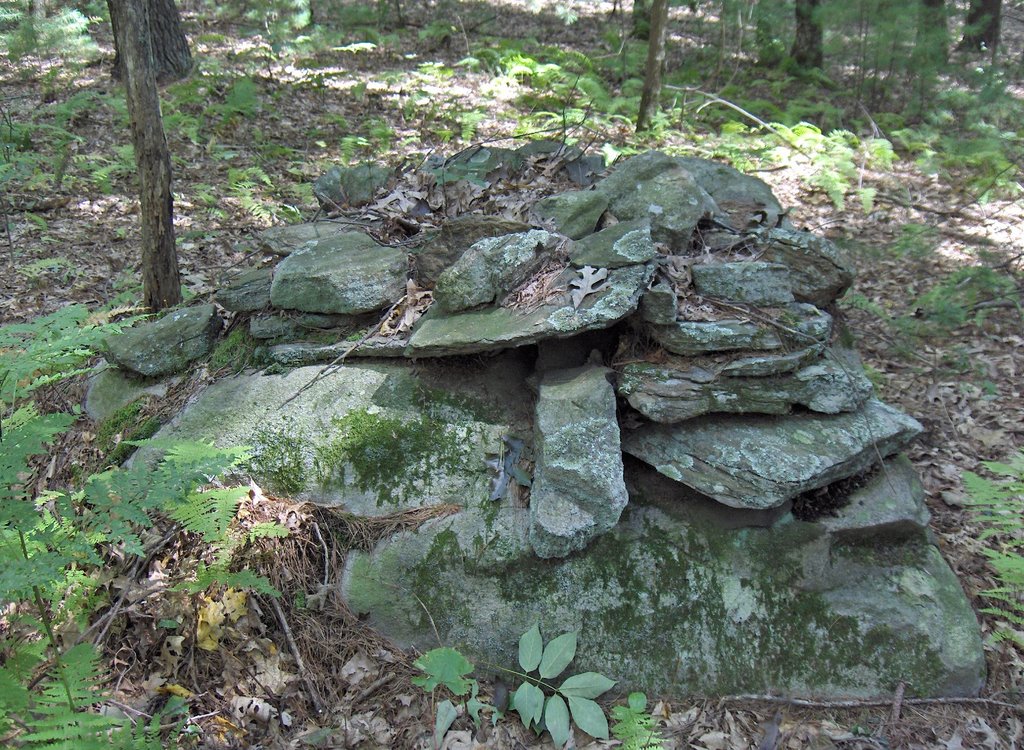
Sheltered Rock On Rock From Bob Miner

by JimP
An interesting feature from the Miner Farm that I had not seen before.

Tuesday, September 12, 2006

Late summer rock-on-rocks

A pile from Concord found by Nick Holland

Jacob Gates Lane Conservation Land, Harvard MA

I went to topzone.com and looked at the whole range of hills starting with Oak Hill in Littleton and going down through Bolton, looking at where I found sites. Sites occur about once per 1/2 mile and the piles are made from a combination of the bedrock fragments mixed with glacial cobbles. It seems that there are many occurances of burnt rock.
Sunday I went to the Jacob Gates Lane conservation land in Harvard and saw lots of features that fit into the same sort of pattern that I have seen all along Oak Hill. Particularly here, the rock piles occur in clusters of three or so piles and rock-on-rocks are very common.
To me, some of it looks astronomical and some of it looks earth related. Parking at the end of the Lane and walking southwest, you cross a wall with a nice standing stone (above).
I walked straight in and uphill to the right until I hit a site on a little knoll/shoulder of the larger hill. The first pile was the nicest. There were about 10 piles and one at the top had a dramatic piece of quartz. The piles were mostly smothered in dead juniper.

I continued south and uphill and back and forth along the slope for about an hour and kept coming across small clusters of rock piles.Like this (second picture shows a detail of the middle pile):
And like this (note the bedrock):
There were so many rock-on-rock I don't know which to illustrate.
At no point was there a large pile, nor a large cluster of the small ones. This suggests incremental and small scale site creation over time.

One the way back out, lower down, was this possible enclosure.
I'll post more pictures later.

Monday, September 11, 2006

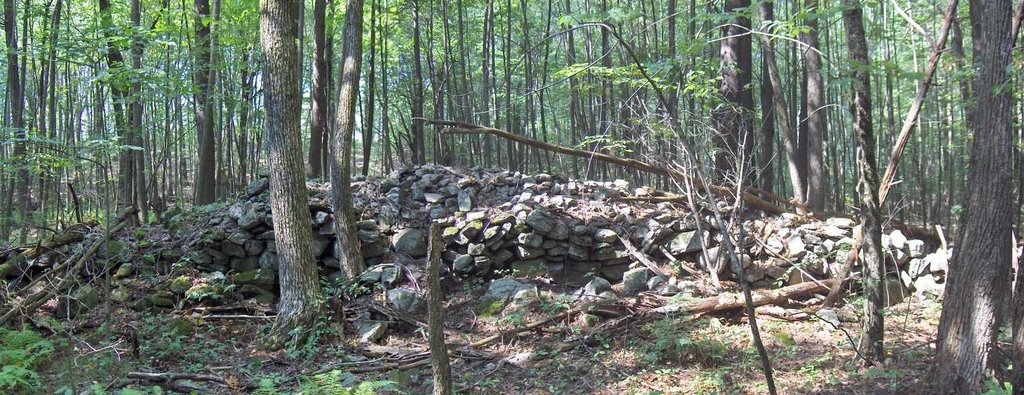
Wall bulges and rock piles at the corners of stone walls

A few days ago we were discussing a rock pile at the Miner Farm built into the stone walls. In Boxborough it is common to see similar features: a pile built into the corner of two stone walls, or one built within a stone wall. I call them "Wall Bulges". There are a number of them on Patch Hill in the conservation land, with a really fine one near the top, and several behind the "Liberty Square" ball fields. Going along on Saturday for a practice and soccer match, I snuck in and got some photos.Yes indeed rock piles like this could have been made as bi-products of field clearing. All the different sizes of rocks which would occur in a field, also occur here in the pile. The thing that is confusing is when there are "companion" rock piles nearby which fail to convey any sense of being practical and related to field clearing.
Here is another:
And nearby:
One more, falling apart into the ferns:
I may have mentioned my belief that some of the farmers were probably Indians. The Patch Family are said to have been religious dissenters from England. Perhaps they accepted or even practiced some Indian ceremonies. Otherwise it is hard to see what might be going on here? What was the chronology of pile building events? Patch Hill in Boxborough is the prime example of this ambiguity.

Two rock piles in Lancaster, MA

I wanted to explore Lancaster because it is between places "near" home, like Harvard, and places "far" from home, like Leominster. Also Lancaster is reputed to have interesting geology. Unfortunately I chose to explore in a glacial outwash area along Brockleman Rd. and there were very few rocks. It is just too close to the Nashua River. But I saw two rock piles at the highpoint of that road and south of the conservation land.
They were next to a house, right next to a new leaching field and they might have been built to get rid of scrap rock from the leaching field. But they were very nicely built.
And there was some whimsy involved with the placement of one white quartz rock.
I haven't looked at the topo map too much since then but I have to find another part of Lancaster to explore, where there is more exposed bedrock.

Burnt rock middens

[Click here]